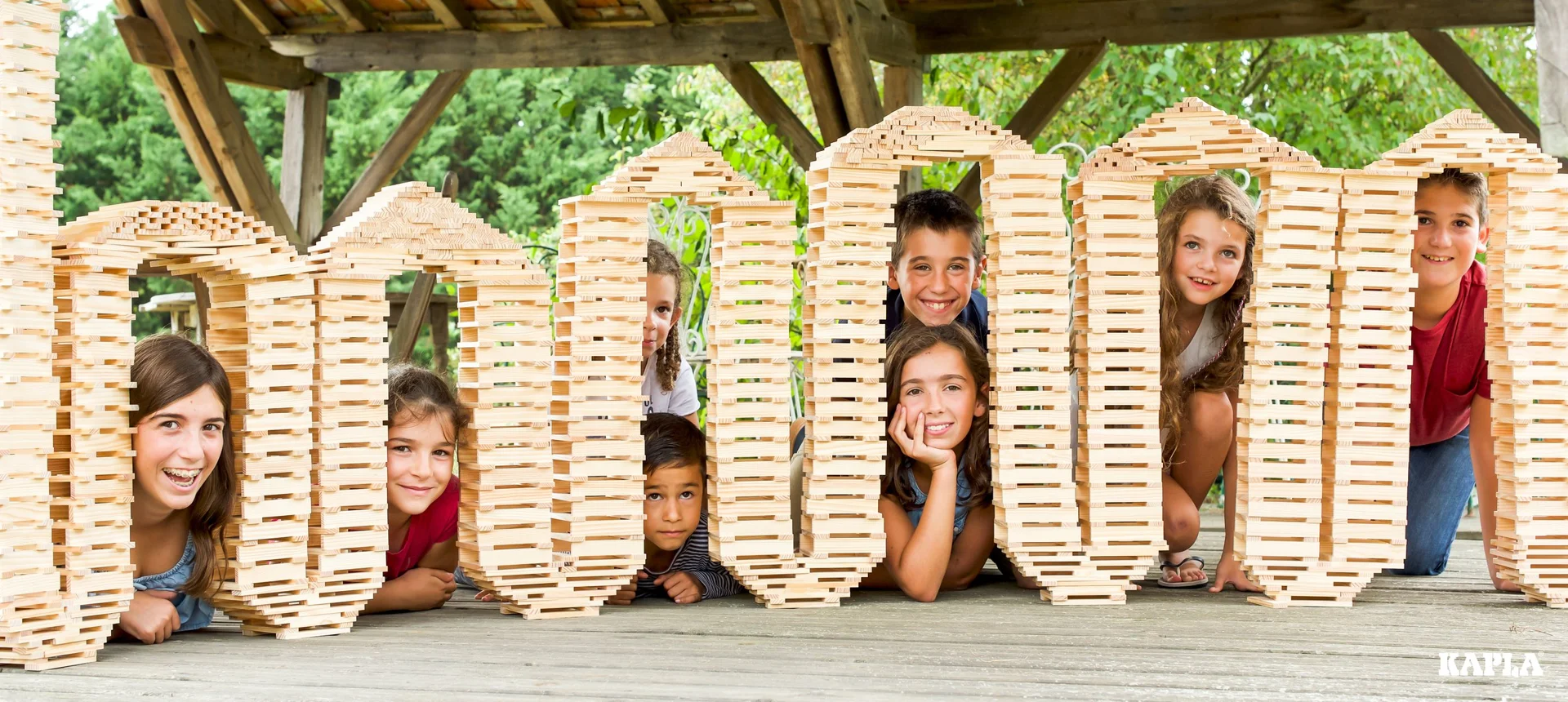
Our workshops begin with a question and room to investigate. Children plan, experiment, make changes and explain their decisions. We offer prompts and guidance while their own ideas shape what they build.
Activities, pace and support are adapted to the age and group. The journey from the first attempt to the finished structure matters too: new questions, shared decisions and personal discoveries.
STEM+
KNOWLEDGE WE CAN BUILD
Science, technology, engineering and mathematics meet in one structure. We investigate balance, compare shapes and develop solutions. Language, art and cooperation enrich the experience.
SIX AREAS OF LEARNING
What grows alongside the structure.
01
Mathematics & geometry
Numbers, patterns, symmetry and proportion become visible. We count planks, compare lengths and connect flat shapes with three-dimensional structures.
An activity to try+
Build two rows of equal length. Make one twice as long. How many planks do you need to add?
02
Science & engineering
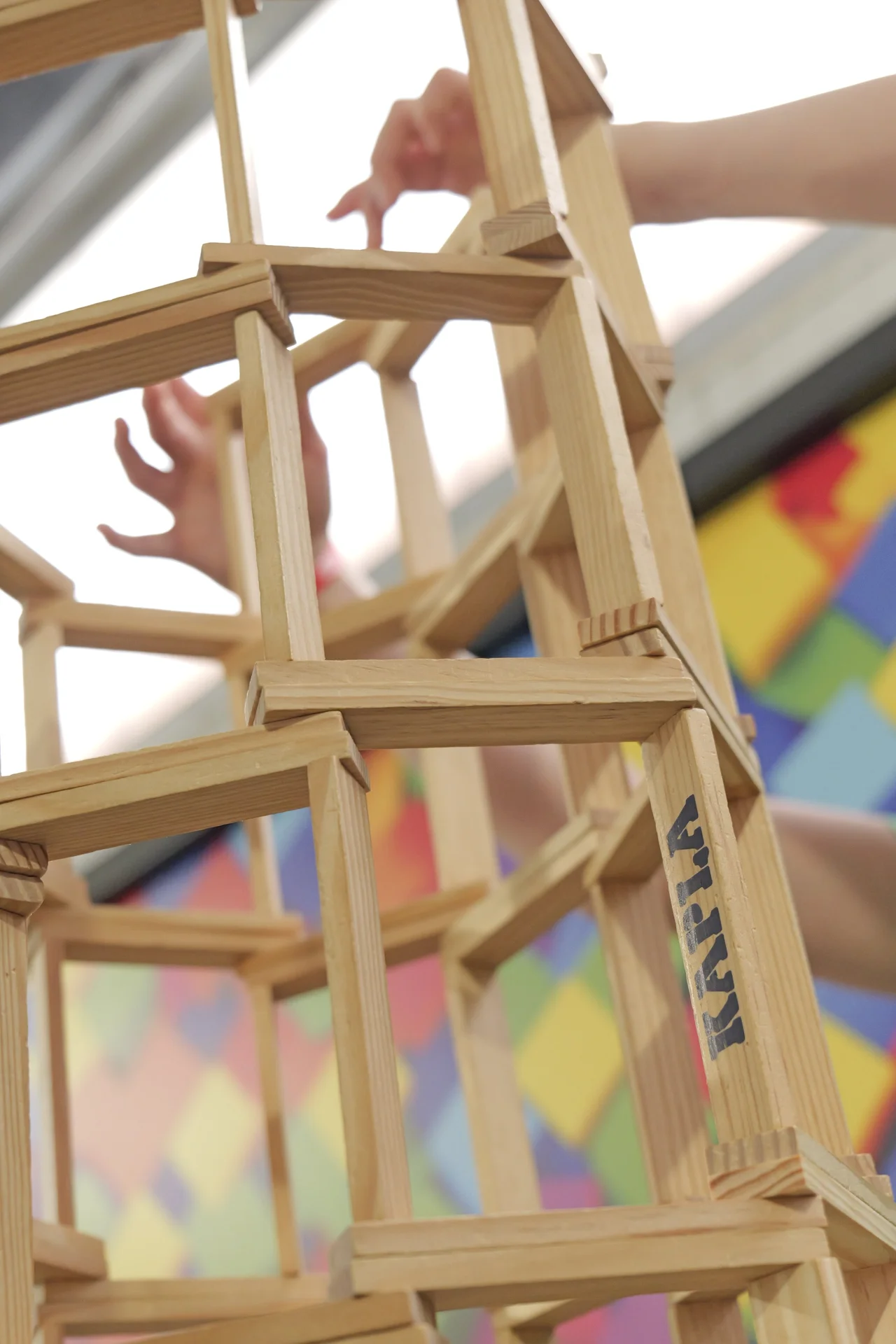
Building lets us investigate centres of gravity, supports and load distribution. We make a prediction, change the structure and compare the result.
An activity to try+
Build two bridges using the same number of planks. Change only the distance between the supports. What do you notice?
03
Computing & logical thinking
Sequences, repetition and finding errors introduce algorithmic thinking. We break building instructions into clear steps that someone else can follow.
An activity to try+
Create a repeating pattern and change one step. Can another group find the change?
04
Motor skills & concentration
Grasping, aligning and carefully placing planks provide opportunities to practise fine motor skills and hand-eye coordination. We follow the building task one step at a time.
An activity to try+
Build a row of narrow supports and connect them. Observe how careful placement affects balance.
05
Language, art & imagination
We describe positions, explain ideas and tell stories about the worlds we build. Structures become a space for architecture, design and personal expression.
An activity to try+
Invent a small town. Introduce one building: who lives there, what is it for and how do you get there?
06
Cooperation & confidence
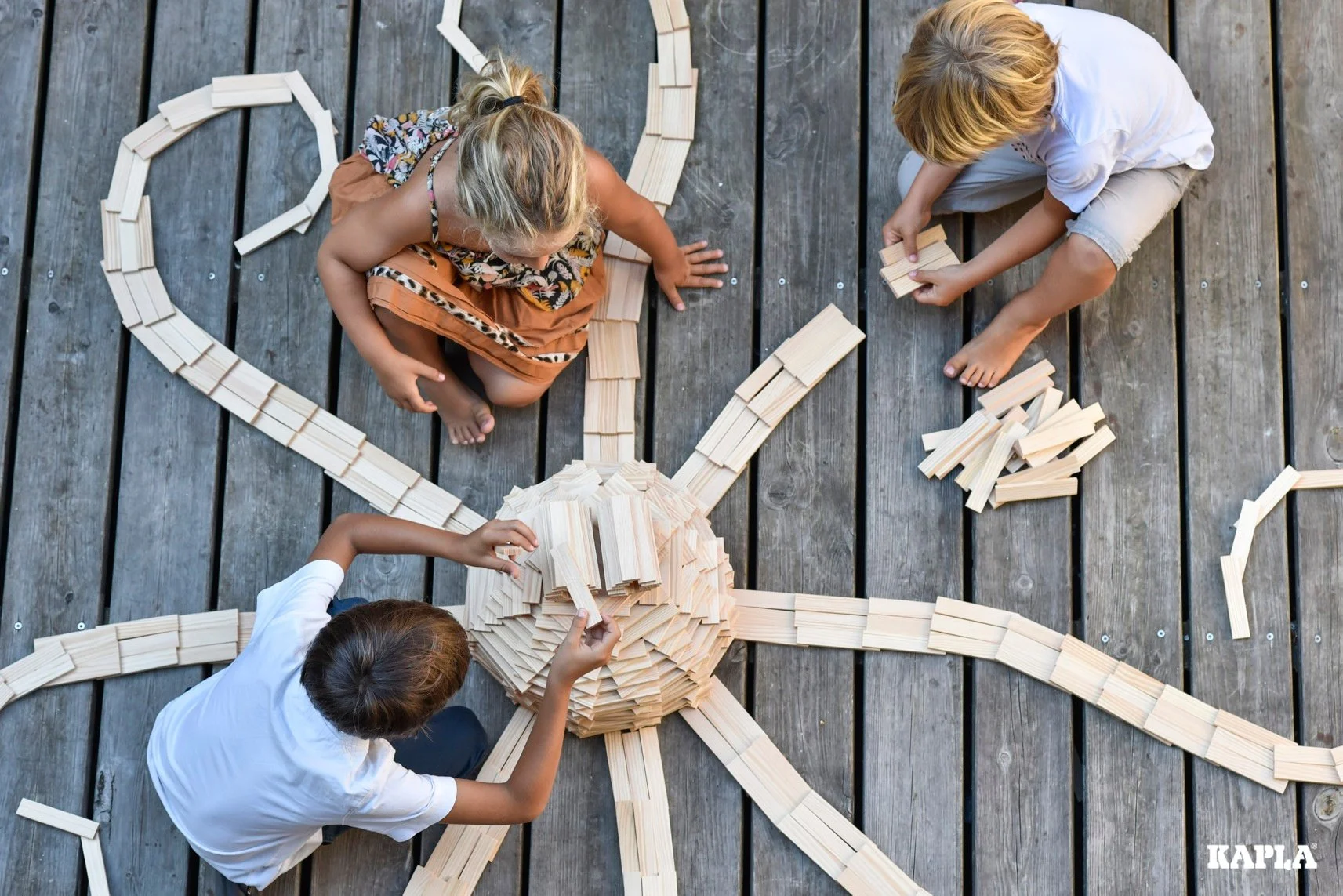
A shared project calls for listening, agreement and responsibility. Children can take different roles, share their ideas and look for the next solution together.
An activity to try+
Share the planning, materials and building roles. Present the result and explain what you achieved together.
FROM THE FIRST QUESTION TO A SHARED RESULT
How we guide the building process.
01
We explore
We get to know the material, observe and experiment. Balance, weight and shape become questions we answer through building.
02
We think with our hands
Precise stacking develops fine motor skills and coordination. Patterns, symmetry and proportions connect maths with hands-on experience.
03
We build together
We agree on roles, exchange ideas and learn to listen. The value of the process is visible in every plank we place together.
04
We celebrate the result
We look at what we have built, share the experience and prepare the finale. The structure comes to an end, but discoveries and memories remain.
DIFFERENT PATHS. ONE SHARED GOAL.
Every contribution matters.
Some plan, others build, describe or document. Roles can change, and activities leave room for different strengths. Before a workshop, we discuss the needs of the group and the support required.
CENTRE KAPLA HRVATSKA
Room for every idea.
We adapt the pace, activities and participation to the group.